Research Focus
The primary research focus of our team is the biology of pulmonary circulation, with a specific emphasis on pulmonary hypertension (PH) in both adults and children. The team has recognized expertise in ion channels, calcium signalling, vascular reactivity, vascular remodelling, inflammation, exposure to particulate air pollution, and the associated signalling pathways.
Overview
The main objective of our team is to study the pathophysiology of the pulmonary circulation in adults and children, with a particular focus on the impact of environmental factors. Our research is centered on pulmonary hypertension (PH), which may be associated with chronic obstructive pulmonary disease (COPD) in adults, or with bronchopulmonary dysplasia (BPD) in extremely preterm newborns which also have long-term pulmonary and cardiovascular consequences into adulthood.
PH is a serious condition characterized by pulmonary arterial remodelling, leading to right ventricular hypertrophy, right heart failure, and ultimately death. PH is also associated with pulmonary arterial hyperreactivity, inflammation, and oxidative stress. Due to the non-specific nature of its symptoms, PH is often diagnosed at an advanced stage. Despite major research efforts, its pathogenesis remains insufficiently understood, and no curative treatments are currently available.
By investigating the pulmonary arterial pathophysiology through both human and murine models of PH, the team operates at a true interface between pulmonary and cardiac diseases.
Our approach is translational, involving physicians and clinical investigation centers (CIC) in pulmonology and paediatrics, with the goal of identifying new curative and preventive therapies for PH.
The team is multidisciplinary, composed of researchers, physician-scientists (including pulmonologists and paediatricians), pharmacologists, physiologists, and toxicologists.
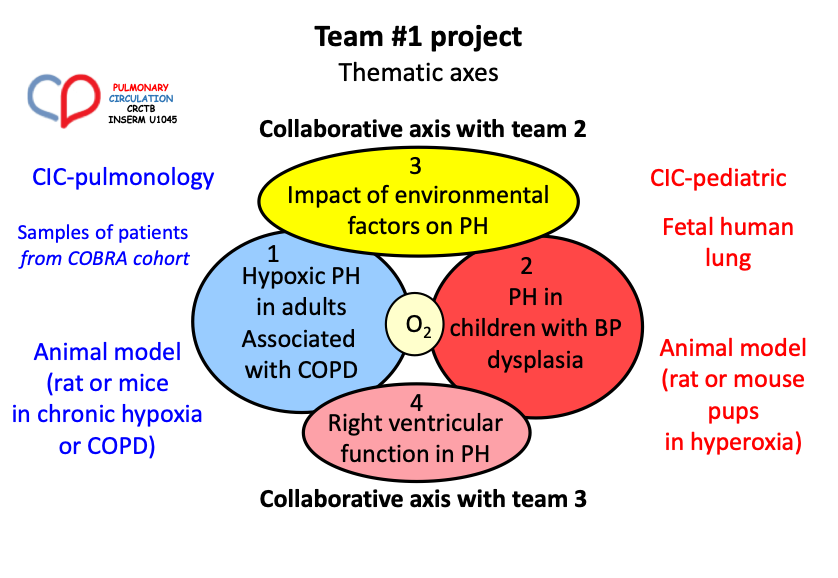
Main Research Axes (Figure 1)
- Axis 1: Study of the pathophysiology of PH associated with COPD in adults
- Axis 2: Study of the pathophysiology of PH associated with BPD in extremely preterm newborns and its long-term consequences in adulthood
Cross-cutting Research Axes (Figure 1)
- Axis 3: Study of the impact of environmental factors in PH. (in collaboration with Team 2 of the unit)
- Axis 4: Study of the right ventricular remodelling in PH. (in collaboration with Team 3 of the unit)